
Older homes have many features worth preserving: original woodwork, plaster walls, and craftsmanship that has stood the test of time. Their original electrical wiring deserves special attention. If a home inspection identifies knob-and-tube wiring, the key questions are whether it is still energized, its condition, and whether it can safely support today's use.
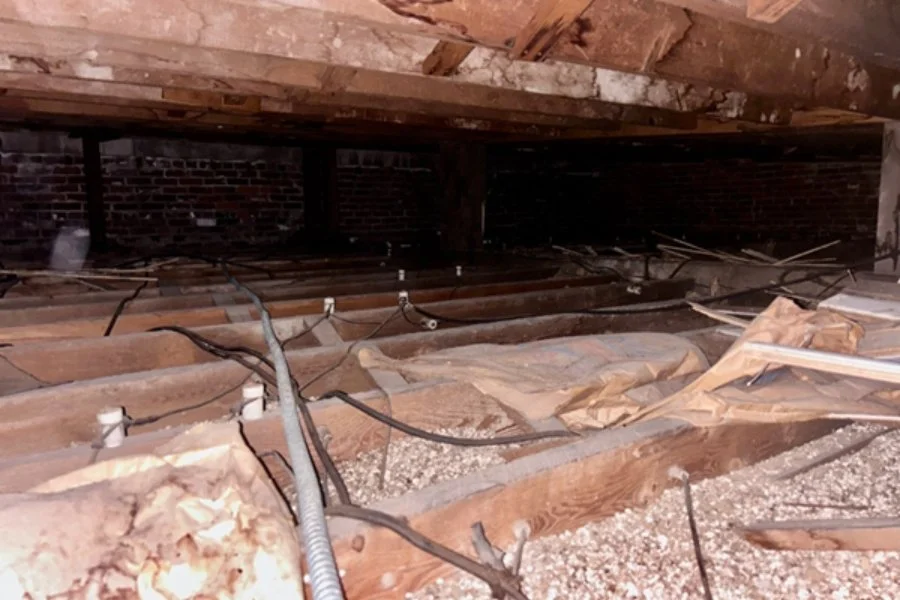
Knob & Tube wiring in an attic space
Safety note: This article provides general homeowner education, not instructions for electrical repairs or a determination that any particular installation is safe. Have a licensed electrician evaluate any suspected knob-and-tube wiring. Do not touch, alter, or attempt to test old wiring yourself.
The origins of Knob-and-Tube Wiring
Knob-and-tube wiring, often shortened to K&T, was one of the earliest standardized building-wiring methods. People used it widely in North America from the 1880s through the 1940s, as electric lighting became a household necessity. It served homes in an era with far fewer electrical appliances and gradually gave way to cable-based wiring systems that were easier to install and, later, included equipment grounding conductors.
The name reflects its distinctive porcelain components. Knobs support individual insulated copper wires away from wood framing, while tubes protect wires where they pass through studs or joists. Unlike modern cable, the hot and neutral conductors typically run separately. The system relies on the surrounding air to dissipate heat and does not include an equipment grounding wire.
Why Can It Be Unsafe in an Older Home?
Knob-and-tube wiring is not inherently dangerous because of its design. The concern is what decades of heat, wear, renovations, and changing electrical demands have done to a particular installation. Durable porcelain components do not prove that the wire insulation or connections are still sound.
Aging wire insulation:
Old rubber and cloth coverings can become brittle, crack, or deteriorate, exposing energized conductors and increasing the risk of shock and fire.
No equipment ground:
Original K&T lacks the grounding conductor that provides a fault-current path for grounded equipment. A three-slot receptacle does not prove that the circuit is grounded.
Unsafe alterations:
Improper splices, unsupported wiring, and poorly executed connections to newer wiring can introduce hazards. A newer electrical panel does not prove that the wiring behind the walls was replaced.
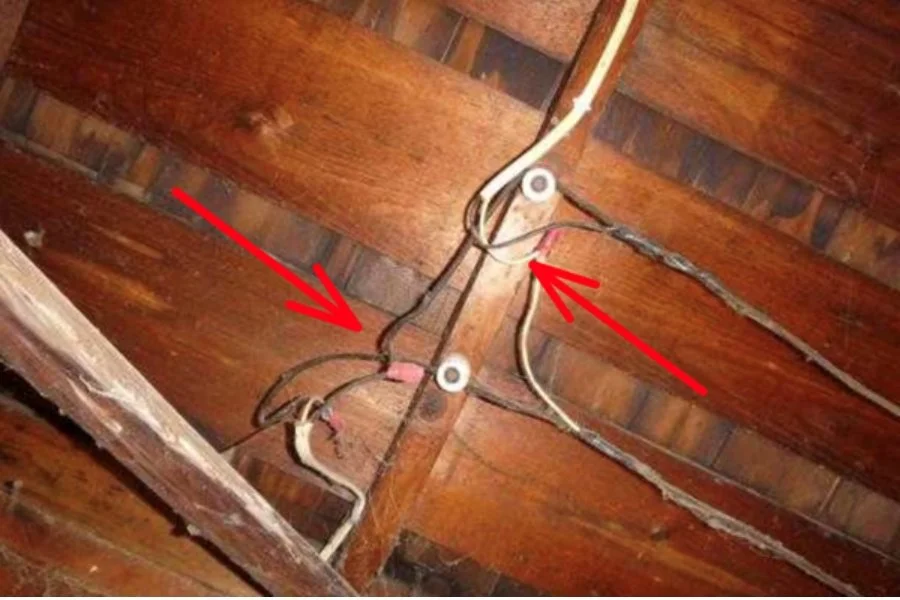
Improper splices into Knob & Tube circuits
Insulation surrounding the wires:
Building insulation can interfere with the heat dissipation the system depends on. Do not bury active K&T under fiberglass, cellulose, or spray foam. Coordinate any insulation project with a licensed electrician and the applicable local authority; requirements and limited exceptions vary.
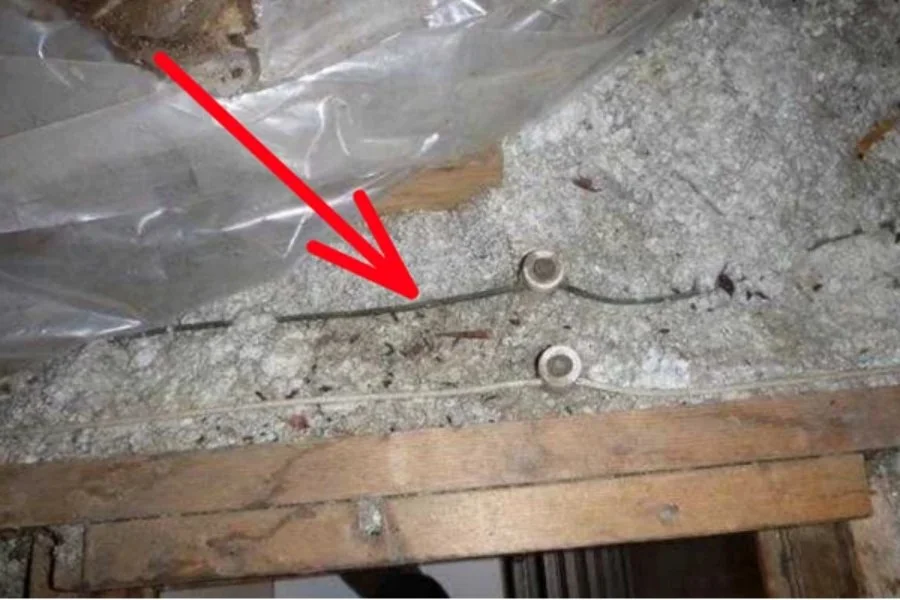
Knob & Tube conductors surrounded by insulation
Overloaded or improperly protected circuits:
Older circuit layouts may not adequately serve today's appliances. Oversized fuses or breakers can allow wiring to overheat instead of interrupting an overload. Circuit capacity must be evaluated—not guessed from the age of the home or the size of its panel.
What a Home Inspection Can—and Cannot—Tell You
A home inspection can identify visible evidence of Knob & Tube (K&T) wiring and observable concerns in accessible areas. It is not an exhaustive examination of every concealed wire or connection. Old porcelain knobs, tubes, or disconnected-looking wires may remain after rewiring, but their presence alone does not indicate whether the system is active. Likewise, modern outlets or a replacement panel do not confirm that all older wiring is gone. At HomePro Inspections, we typically recommend that an electrician evaluate any Knob & Tube wiring for safety and adequacy. A licensed electrician should determine which portions remain energized and assess the extent and condition of the installation.
The Best Long-Term Upgrade: Replace Active Knob-and-Tube
Replacing active K&T with modern, properly grounded wiring is generally the most comprehensive way to address its age-related deterioration and design limitations. The work should be planned and performed by a licensed electrical contractor, with all required permits and inspections. Replacing the panel alone does not replace obsolete branch-circuit wiring.
Start with a professional evaluation:
Ask the electrician to identify active K&T, evaluate accessible insulation and connections, verify circuit protection, and explain any limitations caused by concealed wiring.
Request a written scope and comparable bids:
Discuss full replacement versus a professionally planned phased project. Include circuit tracing, electrical work, permits, inspections, and any wall or ceiling repairs in the scope.
Plan for how the home is used:
Have the contractor assess circuit needs, grounded receptacles, additional outlets, and required GFCI and AFCI protection. Determine whether the panel or electrical service also needs upgrading rather than assuming it does.
Coordinate with renovation and insulation work:
Address active wiring before insulation is installed or cavities are closed. Scheduling related work together can help avoid repeated access and repairs.
Document completion:
Retain permits, inspection approvals, and the contractor's description of what was replaced and what, if anything, remains. If abandoned wiring is left in place, have the electrician verify that it is disconnected and cannot become inadvertently energized.
Warning Signs That Need Prompt Attention
Burning odors, scorching, buzzing or crackling, unusually hot outlets or switches, shocks, and recurring blown fuses or tripped breakers warrant prompt professional attention. Stop using affected equipment and contact a licensed electrician; do not repeatedly reset a problem circuit or attempt repairs. If there is smoke, fire, or an immediate threat, leave the home and call emergency services. An absence of warning signs does not establish that concealed wiring is safe.
Buying, Selling, or Insulating? Check Requirements Early
Insurance acceptance varies: some insurers restrict coverage or require replacing active K&T. Ask the insurer directly and review any lender conditions before a purchase or major project. Local electrical requirements and insulation program rules also vary. Do not assume that all K&T must be removed everywhere or that an existing installation is acceptable merely because it has been there for decades.
Summary:
Knob-and-tube wiring is an important part of homebuilding history, but it is not a safety certificate. A home inspection can flag visible concerns; a licensed electrician can assess the rest of the system and recommend appropriate corrections. Preserve the features that give your older home character—and make an informed, professionally guided plan for the wiring that powers it.
At HomePro Inspections, we are trained to identify these issues during home inspections. We document any problems and recommend resolution by a qualified professional.
Visit our website to learn more or to schedule your home inspection in the Rochester, Owatonna, and Faribault, MN areas. You can contact us today at (507) 202-8942, email us, or use our online “Schedule Now” feature to schedule an appointment.