
Deck Safety and Maintenance: What a Home Inspection Can Reveal
A deck should be a safe, enjoyable extension of the home—not a hidden liability. From summer gatherings to everyday use, outdoor structures endure sun, rain, snow, and foot traffic. That is why home inspection services often pay close attention to outdoor living areas. A careful review of connections, framing, railings, stairs, and surface materials can uncover problems before they become costly repairs or safety hazards. For homeowners, understanding the basics of deck safety and routine maintenance is one of the best ways to protect both people and property.
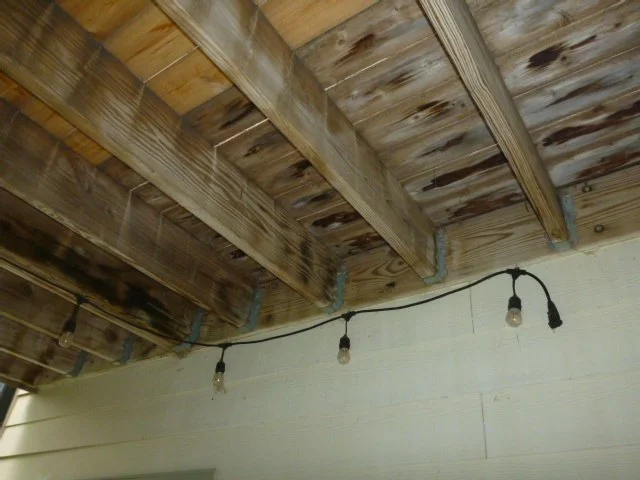
Ensure that the ledger board is securely attached to the structure
Why Deck Safety Matters
Decks are constantly exposed to moisture, temperature swings, and seasonal movement. Over time, these conditions can loosen fasteners, corrode metal connectors, weaken wood, and create unsafe walking surfaces. Industry guidance continues to emphasize the importance of annual deck checks, especially for older structures, because many serious failures begin at hidden connection points rather than in obvious, easy-to-see areas. A deck may look fine from the top while important structural components below are beginning to deteriorate.
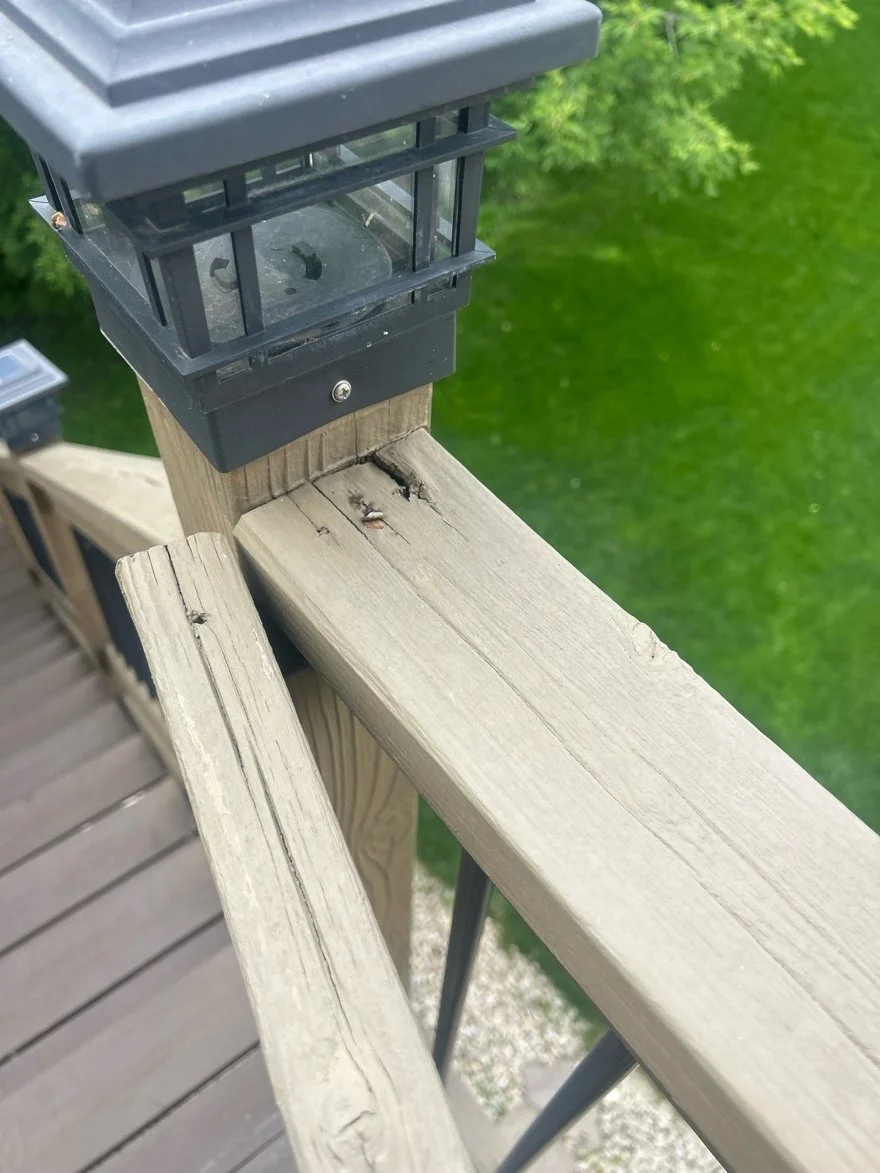
Deteriorated wood at the deck railing
What a Home Inspector Looks For
During a deck-related home inspection, the focus is typically on visible, accessible components that affect structural performance and occupant safety. One of the most critical areas is the ledger board—the connection point where an attached deck meets the house. Inspectors also look for proper flashing to reduce moisture intrusion, signs of separation from the home, the condition of beams and joists, the stability of posts and footings, and the condition of fasteners and connectors. Railings, baluster spacing, stairs, handrails, and decking boards are also important because even a structurally sound deck can pose fall or trip hazards if these elements are loose, damaged, or poorly maintained.
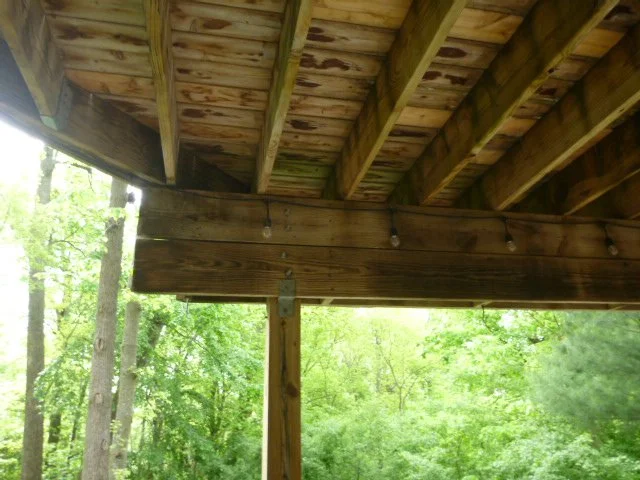
Deck structure
Smart Deck Maintenance Tips for Homeowners
· Inspect the deck at least once a year, and again after severe winter weather or heavy storms.
· Check for soft wood, splitting, rot, insect activity, and areas where water tends to collect.
· Tighten loose hardware and watch for rust or corrosion on connectors, screws, nails, and hangers.
· Test railings and stairs for movement; any wobble should be evaluated and repaired promptly.
· Keep the surface clean by removing leaves, dirt, and debris that can trap moisture and promote mold or mildew.
· Clean wood and composite decking with manufacturer-recommended products and gentle methods, rather than
aggressive washing that may damage the surface.
· Re-stain or re-seal wood decking as needed, following product guidance and exposure conditions.
· Trim vegetation around the deck to improve airflow and reduce long-term moisture retention.
Red Flags You Should Never Ignore
Some warning signs demand immediate attention. If the deck feels bouncy, shifts underfoot, pulls away from the house, or shows visible rot near posts, stairs, or the ledger connection, it is time to call a qualified professional. Loose guardrails, cracked steps, sagging framing, and widespread corrosion are also signs that the deck may no longer be safe for normal use. When in doubt, limit access until a proper evaluation is completed.
Summary:
A proactive approach to deck safety starts with awareness and ends with action. Regular deck maintenance helps extend the life of the structure, while a professional home inspection can identify visible defects that homeowners may miss. Whether you are buying a home, preparing for the outdoor season, or simply protecting your investment, giving your deck the attention it deserves is a smart move. A safer deck means greater peace of mind for your family, your guests, and your home.
At HomePro Inspections, we are trained to identify these issues during home inspections. Any problems are documented and recommended for resolution by a qualified professional.
Visit our website to learn more or to schedule your home inspection in the Rochester, Owatonna, and Faribault, MN areas. You can contact us today at (507) 202-8942, email us, or use our online “Schedule Now” feature to schedule an appointment.