Why Reverse Polarity Is Unsafe: A Home Inspector’s Guide to Electrical Safety
During a home inspection, electrical issues are among the most common—and most misunderstood—findings. One condition that often surprises homeowners is reverse polarity at electrical outlets. Although an outlet with reverse polarity may seem to work normally, it poses a hidden hazard that can compromise electrical safety throughout the home.
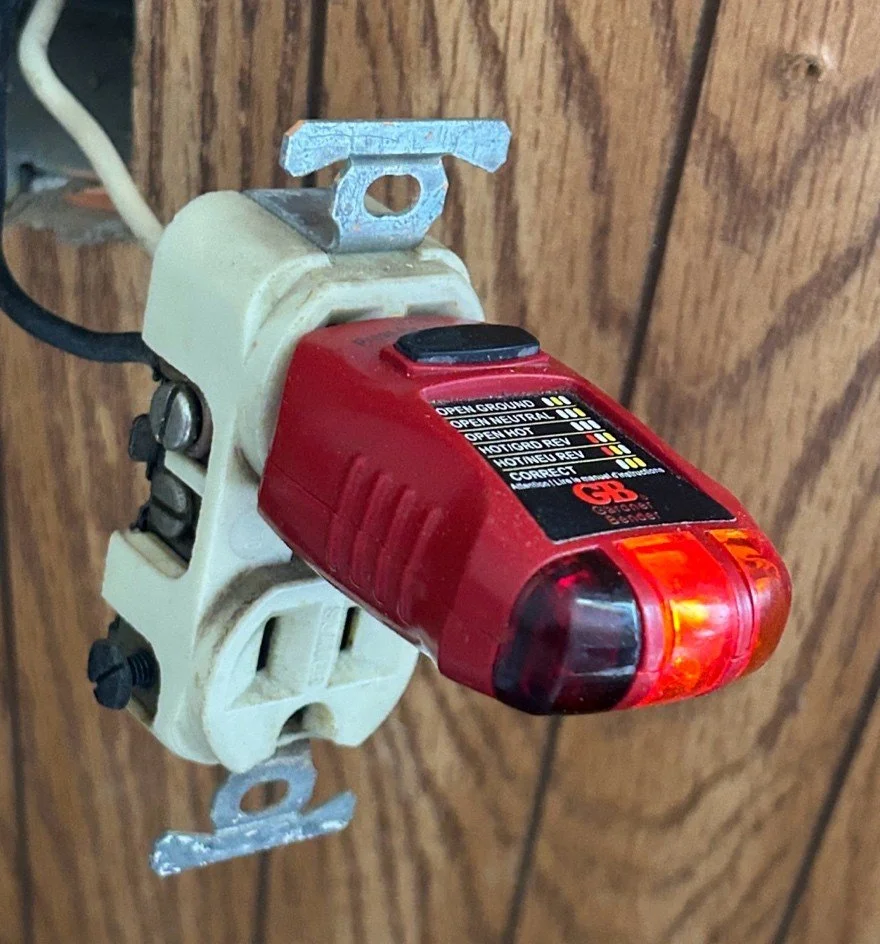
Hot/Neutral reversed
In the photo above, you can see that the black wire (hot) is connected to the silver screw (neutral). The middle amber light is illuminated, indicating Hot/Neutral reversed. Also, the outlet has no wire attached to the ground screw at the bottom left.
Understanding what reverse polarity is, why it’s dangerous, and how it’s corrected can help homeowners make safer decisions after an inspection.
What Is Reverse Polarity?
In a properly wired outlet, electricity flows in a predictable and safe manner. The hot wire (usually black) delivers power to an appliance, while the neutral wire (white) safely returns unused current to the electrical panel. Outlets are designed so that plugs can be inserted only one way, ensuring that internal safety components function correctly.
Reverse polarity occurs when the hot and neutral wires are mistakenly connected to the wrong terminals at the outlet. This wiring error defeats the receptacle's intended safety design and that of any appliance plugged into it.
Why Reverse Polarity Is a Safety Concern
From an electrical safety standpoint, reverse polarity is dangerous because it can leave parts of an appliance energized even when the appliance is switched off. Many devices are built so their internal switches interrupt the hot wire. When polarity is reversed, the switch ends up controlling the neutral side instead, allowing voltage to remain present inside the device.
Common risks associated with reverse polarity include:
Electric shock hazards, especially when touching metal parts such as lamp sockets or appliance housings
Unexpected energized components, even when devices appear to be off
Damage to sensitive electronics, which rely on correct polarity for internal protection
Because outlets with reverse polarity usually look normal, this condition often goes unnoticed without proper testing during a home inspection. Our residential inspection services include thorough electrical testing to catch hidden wiring issues like reverse polarity before they become a safety risk.
How Home Inspectors Identify Reverse Polarity
During a standard home inspection, inspectors test accessible outlets with a plug-in receptacle tester. These testers quickly indicate common wiring issues, including reverse polarity, by displaying specific light patterns.
It’s important to note that while testers are effective screening tools, they don’t repair the issue, they simply alert homeowners to a condition that needs correction by a qualified professional.
How Reverse Polarity Is Corrected
Correcting reverse polarity typically involves reconnecting the outlet wiring so that each conductor is on its proper terminal—hot to brass, neutral to silver, and ground to green. In many cases, the repair is straightforward, but it still requires proper training and safety precautions.
From a home inspection perspective, inspectors do not perform repairs. Instead, they recommend that a licensed electrician conduct further evaluation and make any necessary corrections. This is especially important because reverse polarity at one outlet may stem from wiring issues elsewhere on the circuit, not just at the visible receptacle.
Why Prompt Repair Matters
Leaving reverse polarity uncorrected increases long-term risk. Homeowners may unknowingly assume an outlet is safe simply because it provides power. However, the danger lies in how electricity behaves behind the scenes, not in whether a lamp turns on.
Addressing reverse polarity promptly improves household electrical safety for homeowners in Rochester, Faribault, and Owatonna, and brings the home closer to modern safety standards.
Summary
Reverse polarity is a clear example of why professional home inspections matter. It’s a defect you usually can’t see, feel, or smell—but its consequences can be serious. Fortunately, once identified, it is also one of the more manageable electrical repairs when handled correctly.
If your home inspection report notes reverse polarity, treat it as a safety issue to be fixed, not just a technicality. Proper wiring keeps protective systems working as designed—and helps keep people safe.
At HomePro Inspections, we are trained to identify these issues during home inspections. Any problems are documented and recommended for resolution by a qualified professional.
Visit our website to learn more or to schedule your home inspection in the Rochester, Owatonna, and Faribault, MN areas. You can contact us today at (507) 202-8942, email us, or use our online “Schedule Now” feature to schedule an appointment.