
Why Might Your Attic Space Be Painted White?
Homeowners may be surprised to find their attic painted bright white. This often raises questions like: Was this just cosmetic? Is it covering something up? Why paint an attic at all?
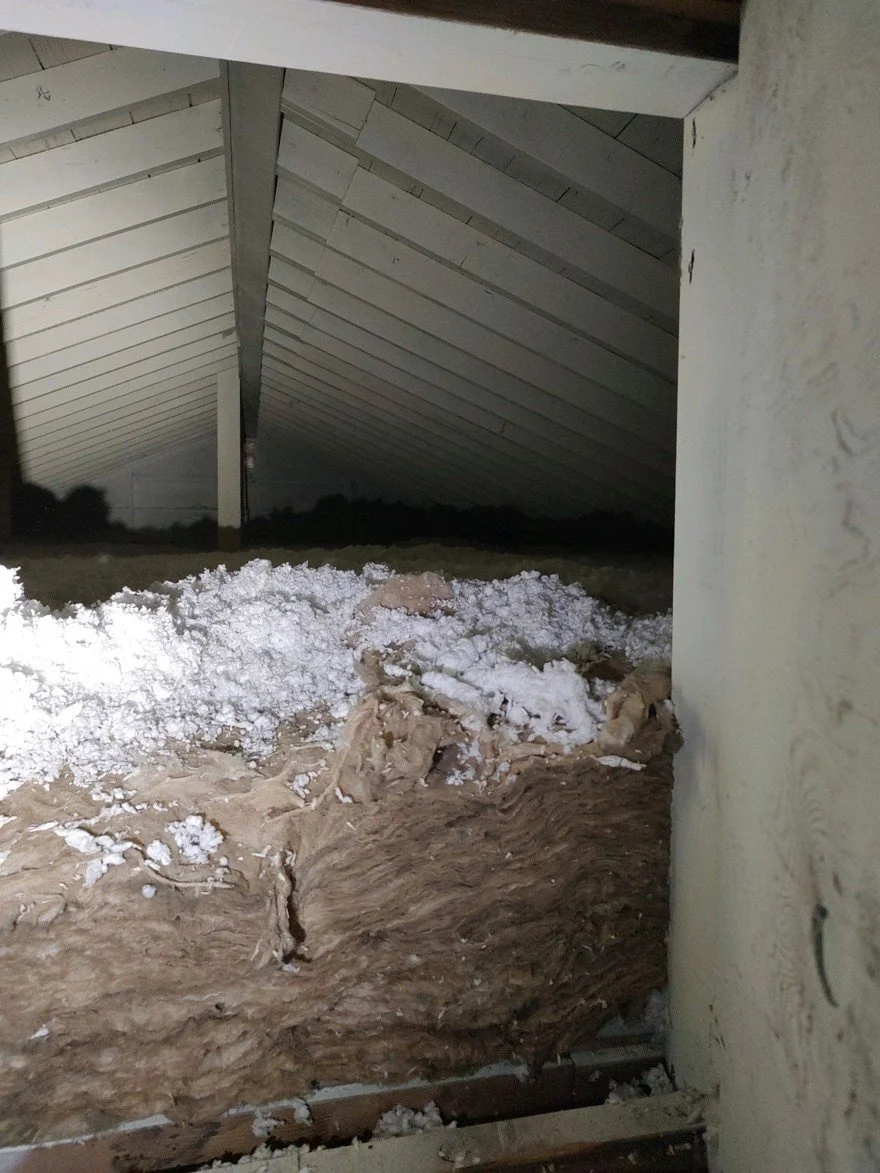
Attic space painted white after mold mitigation
As a home inspector, I occasionally come across an attic painted white. This can raise a red flag for homeowners, who want to know why. The short answer is that painting an attic white after mold mitigation is intentional, functional, and, when done correctly, beneficial in many cases. Here’s what you need to know.
It’s Not Regular Paint — It’s a Mold-Resistant Coating
After mold remediation, reputable companies apply a specialized antimicrobial or mold-inhibiting coating, not ordinary household paint.
These coatings are designed to:
Help inhibit future mold growth
Seal porous wood surfaces that previously supported mold
Create a less favorable environment for moisture-related issues
The coating is typically white because lighter colors provide better visibility and contrast for inspection. This is especially important in attics, where early detection of moisture or staining is critical.
Improved Visibility for Future Inspections
From an inspection standpoint, a white attic is actually a big advantage.
Uncoated attic wood naturally darkens or develops uneven staining over time, making it harder to tell the difference between:
Old staining
Active mold growth
Normal aging of wood
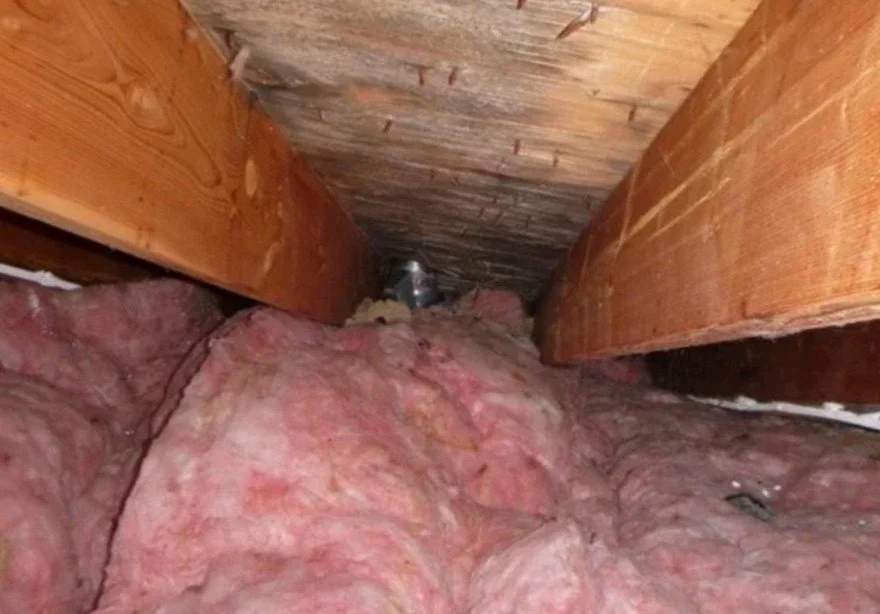
Old moisture staining on the roof decking near a bathroom fan
A white-coated surface enables inspectors and homeowners to quickly identify:
New water stains
Roof leaks
Condensation issues
Possible mold regrowth
This transparency can prevent small problems from becoming costly.
It Shows That Remediation Was Performed — But Doesn’t Guarantee Quality
A freshly painted attic does not automatically mean the remediation was done properly.
Proper mold mitigation should always include:
Identifying and correcting the moisture source
Physically removing mold growth where possible
Cleaning and HEPA‑vacuuming affected areas
Applying antimicrobials or sealants only after cleaning
Painting without addressing moisture or surface contamination is a red flag. A good inspector will look beyond the paint and recommend further evaluation if necessary.
It Helps Seal Porous Wood Surfaces
Wood framing, sheathing, and roof decking are porous. Once mold spores embed, those surfaces can be more vulnerable in the future.
Sealing these surfaces:
Reduces the ability of spores to reattach
Makes surfaces easier to clean
Provides an added layer of protection if humidity rises temporarily
This is especially useful in older homes or attics with marginal ventilation.
It May Be Required by Remediation Protocols
In many remediation standards and industry best practices, post-remediation coatings are recommended when:
Mold growth was widespread
Surfaces were deeply affected
Full material replacement was not necessary
When installed correctly, the coating is part of a long-term prevention strategy — not a cover-up.
A Word of Caution: White Paint Should Raise Questions, Not Alarm
As a home inspector, I don’t consider a white attic a defect by default — but I do recommend further investigation.
As a homeowner or potential buyer, if your attic has been painted after mold remediation, be sure you can answer the following:
Was the moisture source fixed?
Who performed the remediation?
Was clearance testing completed?
What type of coating was used?
Documentation matters.
Summary
Painting an attic white after mold mitigation is typically done for protection, visibility, and prevention, not for cosmetic reasons. When paired with proper moisture control and ventilation, it can be a positive step.
However, paint alone does not fix mold problems. The real solution is always to address humidity, condensation, and air movement.
At HomePro Inspections, we are trained to identify these issues during home inspections. Any problems are documented and recommended for resolution by a qualified professional.
Visit our website to learn more or to schedule your home inspection in the Rochester, Owatonna, and Faribault, MN areas. You can contact us today at (507) 202-8942, email us, or use our online “Schedule Now” feature to schedule an appointment.