
Why Is There Blue/Gray Discoloration in My Bathroom Vinyl Floor?
As a home inspector, I am often asked about unusual staining on bathroom flooring—especially blue, gray, or dark, blotchy discoloration on vinyl. While it may look like a simple surface stain, bathroom vinyl can discolor for several reasons, some of which indicate moisture problems beneath the floor.
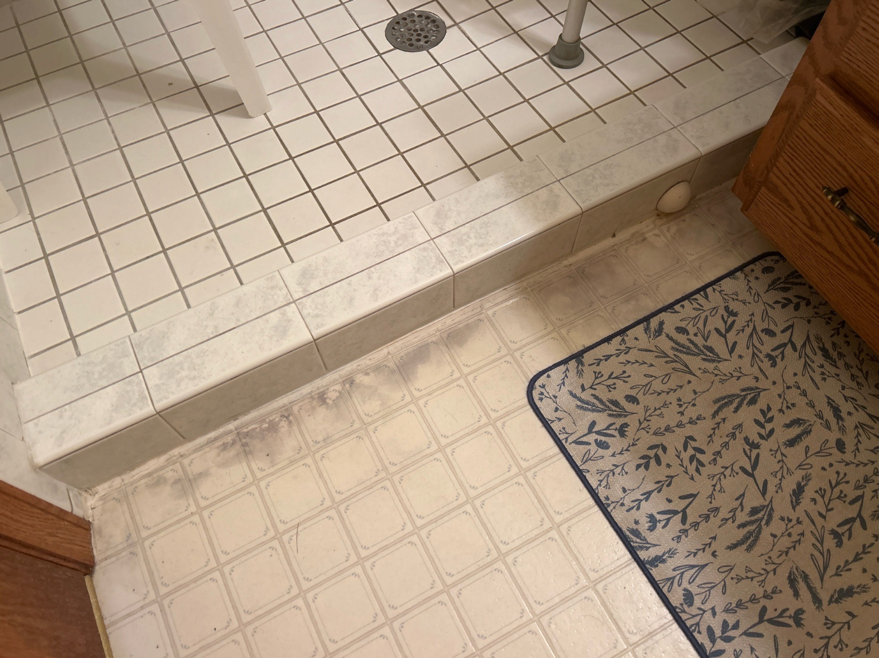
Bluish gray discoloration in the vinyl next to the shower
Common Causes of Blue/Gray Vinyl Floor Discoloration
Blue or gray staining on a bathroom vinyl floor is commonly associated with moisture, mold or mildew activity, chemical reactions, adhesive migration, or staining from rubber-backed mats and household products. The location, pattern, and texture of the stain often provide the best clues.
Moisture Trapped Below the Vinyl
Bathrooms are high-moisture areas. Water can enter around the toilet base, tub edge, shower curb, vanity, seams, or loose flooring edges. Vinyl is water-resistant, but if moisture gets underneath it, the subfloor, adhesive, or backing layer can become stained. This can appear as gray, blue-gray, cloudy, or dark irregular patches that do not wipe away.
Warning signs include soft or spongy areas, lifted edges, bubbling, a musty odor, staining near the toilet or tub, or discoloration that worsens over time. If these conditions are present, the issue may be more than cosmetic.
Mold or Mildew Beneath the Flooring
When moisture is trapped under vinyl, mold or mildew may develop along the backing, underlayment, or subfloor. This can cause dark gray, blue-gray, black, or mottled staining. Because the growth may be below the surface, scrubbing the vinyl's surface often does not remove the discoloration
Homeowners should avoid repeatedly soaking the area with cleaners. Adding more liquid can worsen a hidden moisture condition. If there is a persistent musty smell, visible mold at the seams, or softness in the floor, further evaluation is recommended.
Adhesive or Backing Discoloration
Some vinyl floors discolor from the bottom up. This can happen when flooring adhesive, old underlayment, or backing materials react with moisture or with the vinyl itself. Oils, solvents, or adhesive compounds can migrate upward and cause permanent stains. These stains often appear to be inside the flooring rather than on the surface.
If the stain persists after gentle cleaning and appears below the wear layer, replacing the affected section may be the only reliable correction.
Rubber-Backed Bathmats and Household Products
Rubber-backed bathmats, certain rugs, hair dyes, cosmetics, cleaning products, and toilet-bowl chemicals can stain vinyl. Rubber and plasticizers can react with the vinyl surface, leaving gray, blue-gray, yellow, or brown marks. These stains often match the shape of the mat or object that sat on the floor.
Harsh cleaners, bleach, ammonia, abrasive pads, and strong solvents can also dull or alter the floor finish. Once the top layer is chemically damaged, discoloration may become permanent.
How a Home Inspector Looks at the Problem
Where is the stain located—near the toilet, tub, vanity, exterior wall, or floor seam?
Does the floor feel soft, raised, loose, bubbled, or uneven?
Is there a musty odor or visible staining at the baseboards or transitions?
Does the stain wipe away with mild cleaning, or does it appear to be below the surface?
Has a rubber-backed mat, plant, cleaning product, or cosmetic container been left in that area?
What Homeowners Should Do Next
Begin with a gentle cleaning using a vinyl-safe, non-abrasive cleaner and a soft cloth. Avoid harsh chemicals and aggressive scrubbing. If the stain improves, it may be surface contamination. If it does not change, the discoloration may be within or beneath the flooring.
Next, look for a moisture source. Check the toilet connection, wax ring area, tub or shower caulking, vanity supply and drain lines, and any flooring seams. If the floor is soft, smells musty, or the stain is spreading, consult a qualified contractor, flooring professional, or remediation specialist before covering or replacing the floor.
Summary
Blue/gray discoloration in bathroom vinyl flooring should not be ignored. Sometimes it is a harmless surface stain from a mat or product. Other times, it indicates that moisture has reached the adhesive, backing, or subfloor. The key is to determine whether the stain is on the surface or coming from below. If moisture is involved, fixing the source of the water is more important than trying to hide the stain.
At HomePro Inspections, we are trained to identify these issues during home inspections. Any problems are documented and recommended for resolution by a qualified professional.
Visit our website to learn more or to schedule your home inspection in the Rochester, Owatonna, and Faribault, MN areas. You can contact us today at (507) 202-8942, email us, or use our online “Schedule Now” feature to schedule an appointment.