
Winter in the Rochester, MN area brings more than just cold temperatures and shorter days — it can also cause a variety of unusual noises and changes inside your home. As a professional home inspector, I often receive questions from homeowners who notice new gaps, cracks, and squeaks appearing as the cold weather arrives. Let’s explore why these issues happen and what they might indicate about your home’s structure.
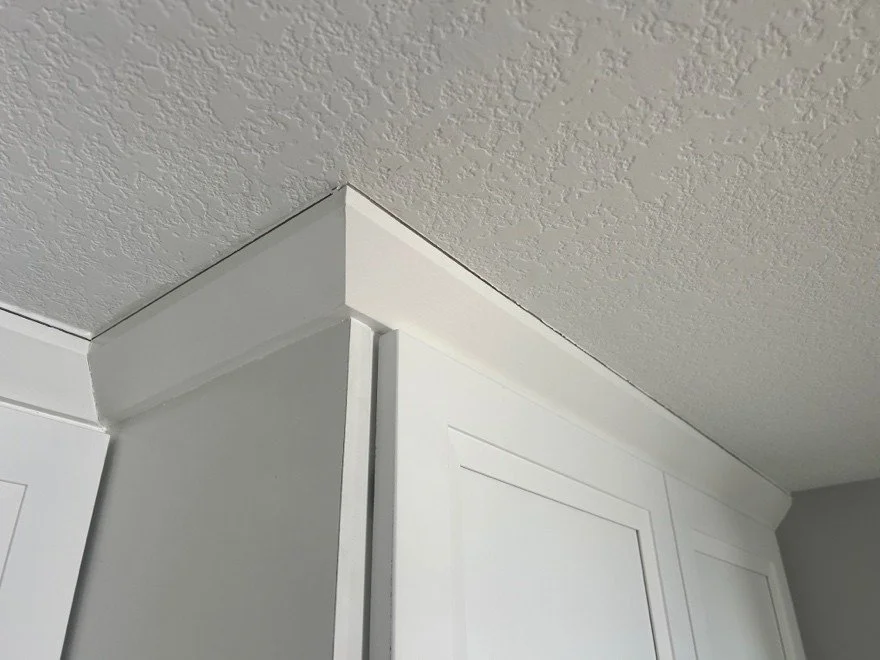
Gap that appears in the winter between cabinets and the ceiling.
Understanding the Cold Weather Effect
When temperatures drop, many materials in your home respond by contracting. This process affects everything from wood floors to drywall and caulking, and it’s especially noticeable in older homes or houses with a lot of natural materials. The changes are usually harmless but can be unsettling if you aren’t expecting them.
Why Cracks Appear
Cracks in walls and ceilings often happen in winter because building materials expand and contract. When the temperature drops, materials like wood, plaster, and drywall shrink. This puts stress on joints or weak spots, causing visible cracks. If indoor humidity also drops due to heating, the air dries out these materials more, increasing the chances of cracks forming.
What Causes Gaps?
Gaps around windows, doors, baseboards, or between floorboards are a common winter issue. When wood and other materials shrink in cold weather, the fit between pieces can loosen, creating visible spaces. These gaps can also allow drafts, which reduce your home's energy efficiency and comfort. Sometimes, seasonal gaps are normal, but persistent or growing gaps may indicate that your home needs better insulation or moisture management.
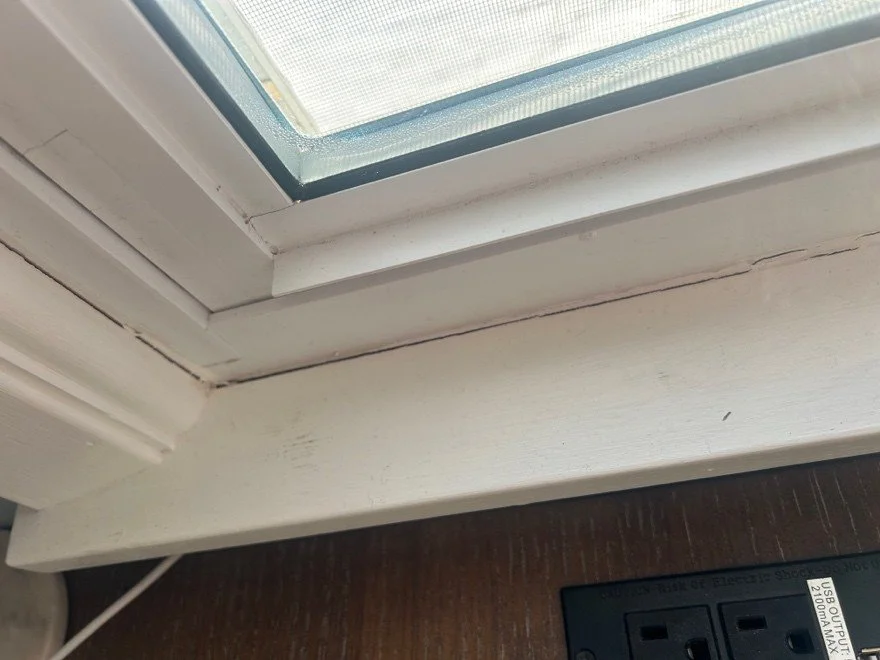
Gap between the window trim and frame.
The Mystery of Squeaks
Squeaky floors and stairs often become louder in winter. As wood contracts, nails and fasteners may loosen, causing boards to rub against each other or metal supports. This friction creates the familiar squeaking sound. Humidity plays a key role—drier air means drier wood, which moves more and increases the likelihood of squeaks. I once had a house where a squeak appeared right in front of my TV chair during the winter.
Summary
What should a homeowner do? Monitor any changes you notice. Watch for cracks, gaps, and squeaks. If they fade or lessen as the weather warms, they’re probably caused by seasonal movement. If they don’t, try to see if you can determine the source.
At HomePro Inspections, we are trained to identify these issues during home inspections. Any problems are documented and recommended for resolution by a qualified professional.
Visit our website to learn more or to schedule your home inspection in the Rochester, Owatonna, and Faribault, MN areas. You can contact us today at (507) 202-8942, email us, or use our online “Schedule Now” feature to schedule an appointment.